User Experience
Above the fold – scroll or click? - Part 1
Do users scroll or click on the web? Is scrolling bad for the user experience? How important is the information “above the fold” really? This is one of the things we try to clarify in part 1 of 2 of our miniseries.
What is “above the fold”?
“Above the fold,” or above the fold, is the content you see immediately when you arrive on a webpage without having to scroll. The term comes from the newspaper world and referred to the top half of a newspaper that was visible when the paper was folded in half. To entice people to buy the paper, the content above the fold had to capture their interest. Including the most important headlines, images and ads on the paper’s upper half was therefore crucial.
The concept has since carried over into the digital world, but a lot has changed in web development since then. The digital era has altered the way we consume information and we spend more time online. At the same time mobile usage is increasing and our digital behavior continues to evolve. The question many ask is how relevant the much-debated fold really is today?

The Fold
How important is "above the fold" really
Scrolling used to demand more from a user. You had to click and drag the scrollbar along the browser window, or click the arrows on the scrollbar repeatedly to move down the page. Scrolling was a greater effort and meant a worse user experience. The result was also that content above the fold took on a more important role.
“Scrolling is not decision based. Users simply scroll without thinking about it. Clicking on the other hand, is decision based. Clicking requires an audience to know that what they want is on that page, and to be motivated to get there.”

Advantages and disadvantages of scrolling and clicking
There are of course advantages and disadvantages to both scrolling and clicking. Scrolling is often done without much effort, while clicking requires thought and a decision. Different types of visitors may also behave differently depending on the context they are in, which stage of the decision process they are at, or which device they are using. Customers often visit a website more than once before making a purchase decision. They Google and compare companies and products and then return a second or third time before going through with the purchase. Some may do research on their mobile on the way to work and then complete the purchase on a computer at home on the sofa.
“Less content above the fold may encourage more exploration
below the fold”
Choosing between scrolling and clicking is a divisive issue, but the trend points to scrolling becoming increasingly common and accepted. Studies carried out by Norman Nielsen Group from 2010 showed that as much as 80% of our time was spent above the fold. A new study in 2018 showed that the figure had decreased to 57%. These figures therefore show that scrolling has increased compared with earlier, but that the fold is still important. It may be that the area above the fold no longer serves the same function as before, but that it is important for capturing the visitor’s interest and arousing curiosity. Other studies have shown that less content above the fold can instead encourage visitors to explore the content below the fold
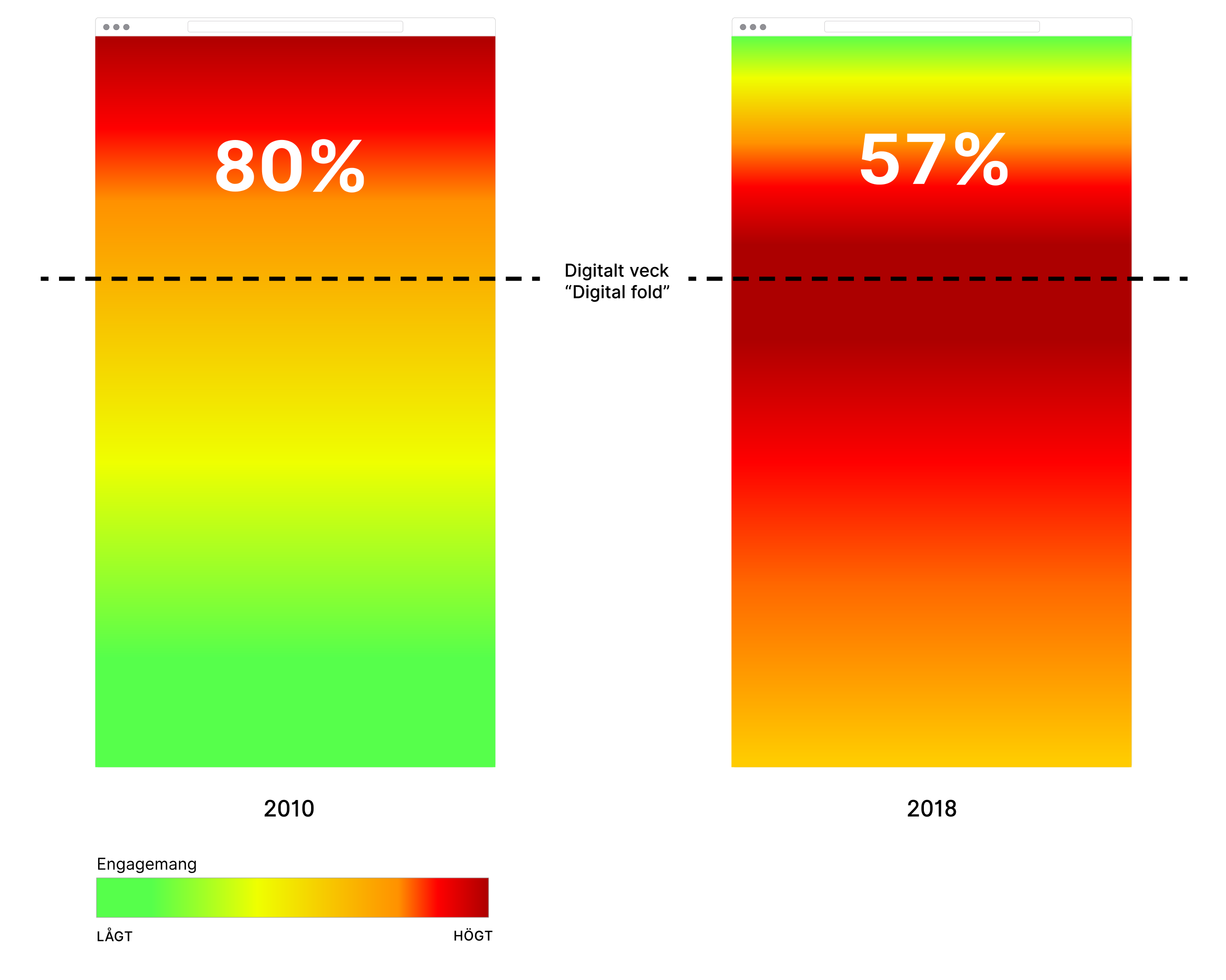
In 2010, 80% was spent above the fold and in 2018 the figure had decreased to 57%
Is there even such a thing as the fold?
Even though it’s still important to capture the visitor’s attention above the fold, it’s a myth that your users don’t scroll. It’s just about grabbing the visitor’s interest above the fold and then giving them a reason to scroll. At least that’s what Luke Wroblewski claims, even saying there isn’t really a fold. Since we have more different devices today, above the fold isn’t the same on a mobile screen as on a desktop screen. He argues that even though we spend more time above the fold, most of our engagement happens further down the page. Here the user is often sufficiently convinced to actually interact and convert. The area above the fold doesn’t play the same role it used to.

Above the fold is what is shown directly on the screen
Strategy, planning and UX
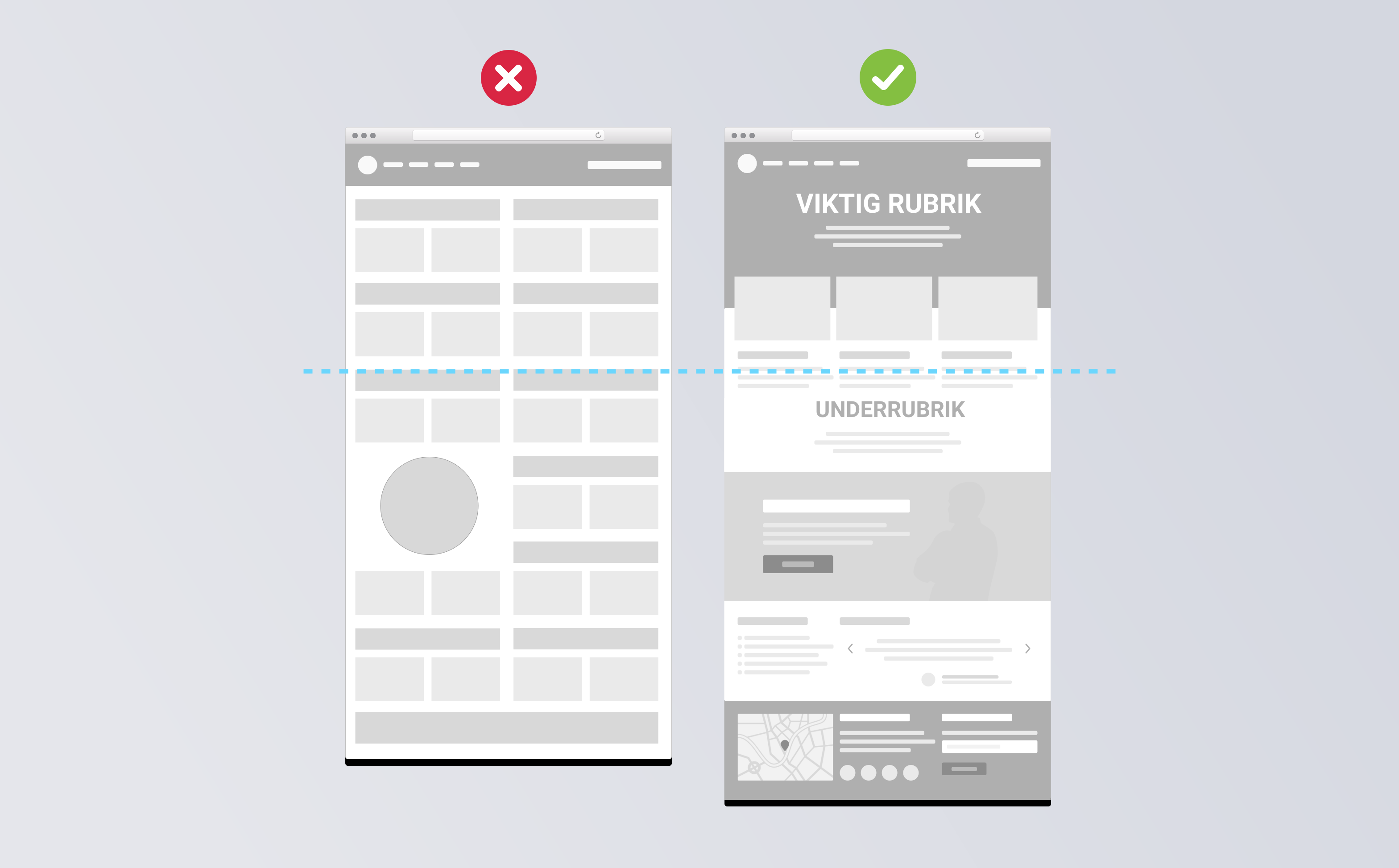
Instead of cramming all information above the fold, it's about having a well-thought-out layout and making sure the right things are in the right place. That way we can lead the user further down the page or deeper into the structure. The key is to find what motivates users to click or scroll. How appealing do your visitors find your offer at the moment you ask them to convert? Important calls-to-action must be available in the right place at the right time, that is when the user is ready to make a decision and move forward in the decision process. This does not necessarily mean it has to be placed above the fold.
You simply need a strategy and to prioritise your content. What should be shown first and what is secondary? What captures visitors' interest and sparks their curiosity? How can I give them a reason to want to scroll or click through to find out more about my product/service? Sometimes you can try breaking information into smaller parts so the user can take it in on their own terms. This supports so-called microlearning and gives an opportunity to encourage scrolling.
“The issue isn’t whether the call to action is visible. The issue is whether your call to action is visible at the point where someone has become convinced to take action”
Much of it is about creating a natural user flow and enticing users to read on. It applies whether it’s about getting users to click or to scroll. Here, UX and design play an extremely important role. With the help of UX and design we can structure the content in a way that appeals to the user and create a visual hierarchy that brings the right things into focus. Our eyes scan a webpage as we scroll. Even something as simple as choosing a clear, readable typeface or using the right color combinations and images can make a big difference in creating the right kind of dynamics that draw the eye
Summary
To summarize the fold and the question of whether scrolling is necessary or not, we can note that scrolling has increased over the years. Our mobile behavior now affects how we interact on our computers and has played a part in this development. Scrolling is no longer necessarily bad for the user experience; perhaps it's the opposite. It's about guiding the user correctly, having a strategy and prioritizing your content. With the right motivation, users will scroll below the first fold.
- We can conclude that the first impression above the fold remains important for capturing your visitors' interest, but it may not be where your users make their purchase decisions or convert.
- The top screen fold should be seen as an area to spark curiosity and give the user a reason to scroll further.
- Content needs to be presented in a way that encourages scrolling because it's often below the fold that your users interact.
- We therefore need to make sure we use the first fold better than we have before.
We hope this has given you a better handle on what the famous fold is about. In part two of this mini-series we explain more about how you can actively work to encourage scrolling.
Would you like to know more about how
we can help you?
Get in touch with us and we'll tell you more.