Working methods
MVP
What is an MVP - Minimum Viable Product? How to launch a website or service that delivers value from day one.

When designing and developing digital products and services it is crucial to choose the right strategy to maximize user engagement and loyalty. It is also important to focus on generating customer value as quickly as possible to achieve the best results. One method that has become increasingly popular and effective in innovation and product development is the Minimum Lovable Product (MLP).
In this article we explain what it is, how it differs from the better-known Minimum Viable Product (MVP) method and how you can make use of an MLP in a digital initiative.
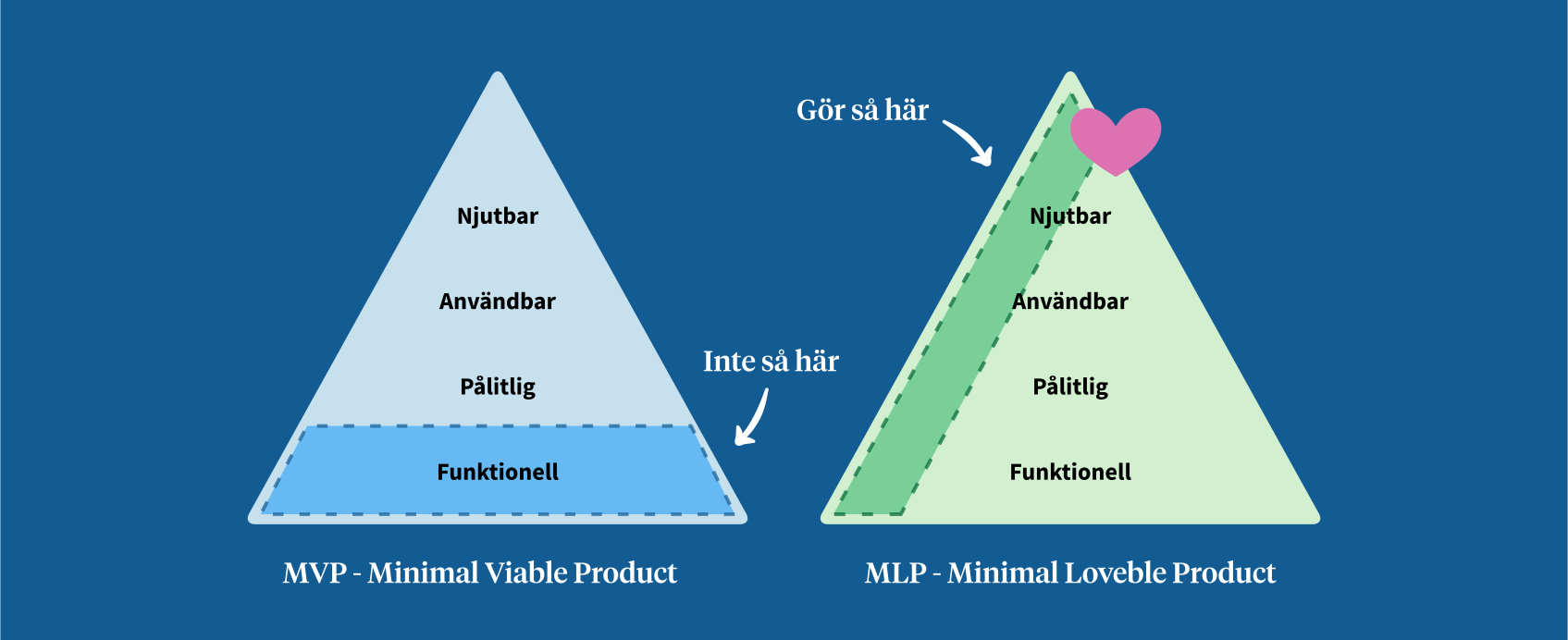
Historically, companies have often focused on getting products to market quickly and then working agilely and iteratively to improve and add features. From this have come approaches such as the Minimum Viable Product (MVP), which aims to quickly launch the smallest functioning product and has become a buzzword. But getting something to market quickly is far from everything required to succeed in the long run.
The value the product offers customers is at least as important. When we focus more on value it leads to creating a product or service that solves customers’ problems and makes them more attractive, rather than launching products for the sake of launching products. This has led to a development of the MVP into the MLP - Minimum Lovable Product.

Minimum Lovable Product (MLP), or the "minimum lovable product" as it is called in Swedish, is a concept or strategy in product development. In an MLP you strive to create and launch a product that not only meets users' basic needs but also evokes strong positive emotions – something that makes users enthusiastic and engaged. Here, design, UX and the user experience play an important role.
In an MLP you add design elements and engaging features that not only make the product usable, but also lovable. The goal is to create a product that forms an emotional connection with users, gives them a positive and memorable experience, and fulfills their deeper needs and wishes.
Users and customers today are picky, impatient and quick to decide whether they like what they see or not. And once they've decided something is bad, it's incredibly difficult to get them to change their opinion. You're working uphill, and even if, against the odds, you were to exceed their expectations, they might not even be willing to listen or look. If, instead, you make a good first impression, it's easier to maintain interest.
Imagine living in a small town that has only one café with a simple menu. As a resident of the town you are content with that. You’re glad there is even a café to go to. If more cafés were to establish themselves, the offering would grow, choices would increase and visitors would eventually become more demanding. The cafés would then need to think more about what they offer on the menu, how the premises look and other elements that affect whether customers have a positive experience of the café visit. The same goes for digital products and services. When competition for customers is strong you need to be able to differentiate yourself from competitors and increase customer loyalty. Making your product or service lovable is then a good approach to achieving greater success.

+ Stronger engagement
When users love the product, they are more likely to use it regularly and recommend it to others. This can increase the user base and boost the product's popularity.
+ Higher customer loyalty
Users who love the product are more likely to remain loyal and continue using it over time. This can reduce churn and provide a stable customer base.
+ Increased growth
Since an MLP represents the minimum required for customers to love a product, rather than just tolerate it, it is also about customer satisfaction and prioritizing the customer experience. That, in turn, is linked to business growth, so with a more lovable product you can increase growth.
+ Reduced support and maintenance
Users who love the product may be more tolerant of minor bugs or issues, which can reduce the load on both customer support and the operations team.
+ Collect user data and feedback
Engaged users are more likely to provide valuable feedback and data that can be used to further improve the product.
– Time- and resource-intensive
Developing an MLP can be more time- and resource-intensive than creating a simpler MVP. It can be difficult to limit yourself to building the minimal lovable product; often you want to design your vision and final product and risk exceeding schedule and budget. It's therefore important to balance lovability with time and budget.
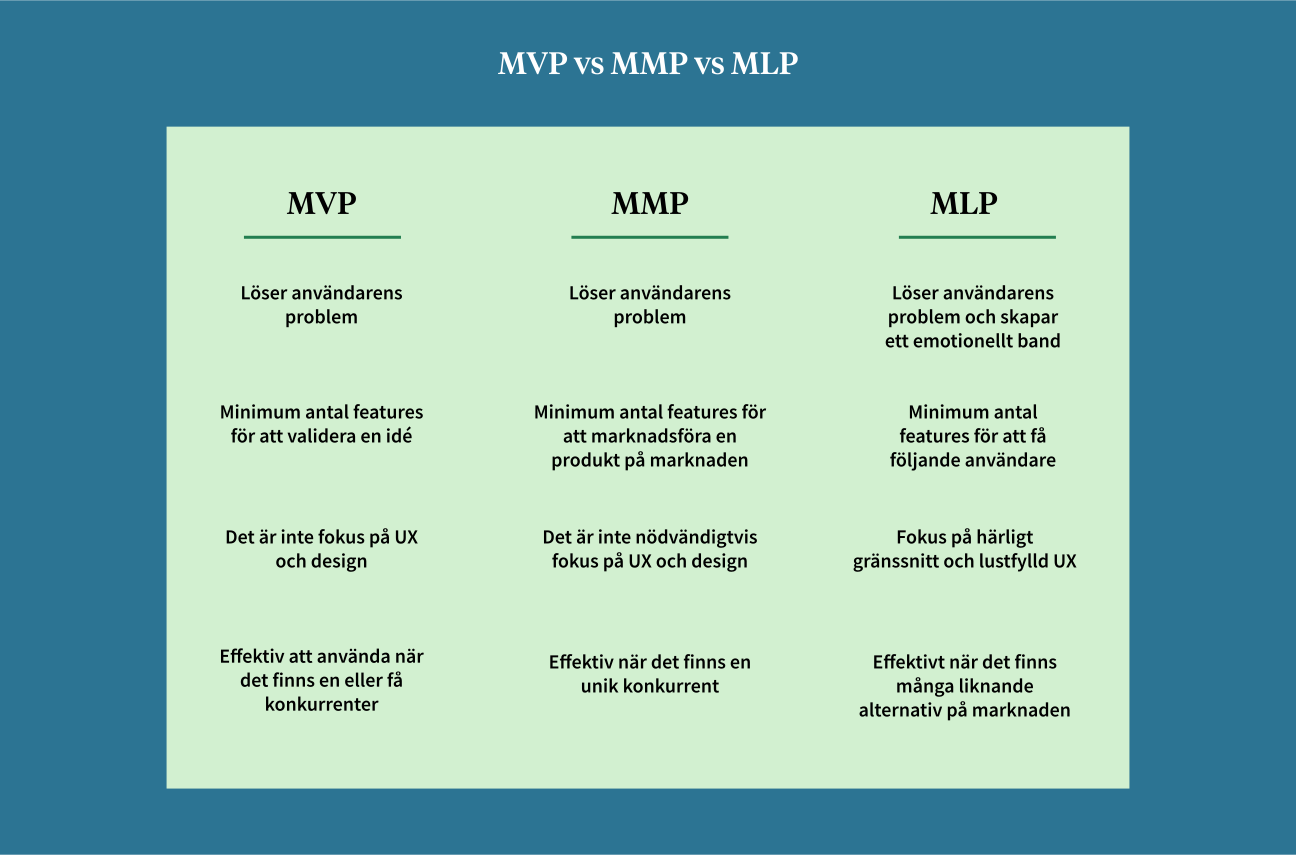
The short answer is that it depends on what type of project it is and what stage the project is in. If you don't have much information about the target audience and the goal is to quickly validate an idea or product concept and gather feedback to further develop it, then an MVP may be the best method and approach.
If the goal instead is to create a product that customers will love, while increasing customer loyalty or differentiating yourself from competitors, then an MLP may be the better option. Regardless of which method you choose, both are iterative processes.
The Minimum Lovable Product (MLP) is a concept or strategy for product development that not only makes the product usable but also lovable. It can be particularly valuable when you want to build strong relationships with your users and differentiate yourself from your competitors. But it is important to ensure that it is the right strategy for your specific project by considering time, resources and goals for your digital initiative.
At Limetta we help clients with both MVP and MLP projects. Want help with your digital initiative? Contact us and we'll help you!